Pune
08048074958
+917043486476
Diabetic Foot Solution

Diabetic Foot Solution

In stockcod not available

Subcategory Tags

Phone Number

08048074958

Please keep 0 before dialling the number.

Mon-Thu: 10 AM - 2 PM • Fri: 3 PM - 7AM

Other Website Visit our other website
Address Flat no. 1, Laxmi Mahal Apartment, 2163, near Neelayam Theatre, Sadashiv Peth,

Pune, India, 411030
Description

NORMAL DIABETIC SHOE: Price range 4500 to 6800 plus GST 1) Diabetic shoes decrease the risk of diabetic foot ulcers and thereby reduce amputations. They provide support and protection while minimizing pressure points on the feet. They also have extra depth to accommodate diabetic inserts. There are many styles to choose from, and the shoes look much like any other shoe. 2) Diabetic shoes are often wider and deeper than regular shoes to accommodate a special multi-density insert that is designed to reduce pressure and callouses to the bottom of feet. Diabetic shoes have a larger “toe box” to prevent squeezing of the toes. Who is eligible for the Medicare diabetic shoe program? - History of partial or complete foot amputation - History of previous foot ulceration - History of pre-ulcerative callus - Peripheral neuropathy with evidence of callus formation - Foot deformity - Poor circulation  Price range 4500 to 6800 plus GST

Keywords

Other Products

view all

68179d65be22ee500d53ff54 Card 2

product image
Prosthetic

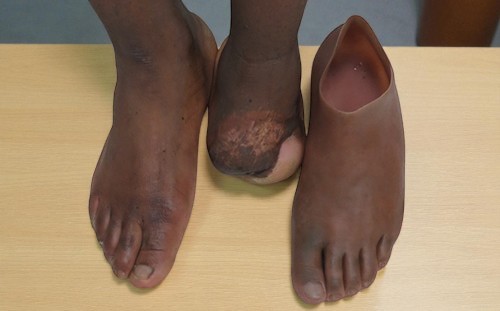
Partial Foot Prosthesis – Types, Design & Benefits A partial foot prosthesis is a custom artificial limb designed to restore mobility, balance, and comfort after a partial foot amputation. Depending on the amputation level, prosthetic options include toe fillers, transmetatarsal prosthesis, Lisfranc prosthesis, Chopart prosthesis, Syme prosthesis, and ankle disarticulation prosthesis. Made with advanced materials like silicone, carbon fiber, EVA, and pelite, these prostheses provide stability, natural gait, and patient comfort. Each partial foot prosthesis is tailored with a custom socket, foot component, and suspension system to ensure proper fit, shock absorption, and energy return. With the guidance of a certified prosthetist, patients receive personalized solutions that support walking, standing, and daily activities. Regular rehabilitation and follow-up care ensure long-term comfort, durability, and functionality.

68179d65be22ee500d53ff54 Card 2

product image
Orthosis
INR 8500

68179d65be22ee500d53ff54 Card 2

product image
Orthosis

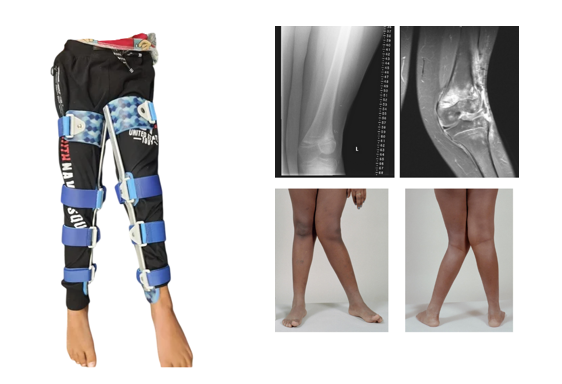
Genu varum (bowlegs) and genu valgum (knock-knees) are common knee deformities in children that often resolve naturally as they grow. Genu Varum (Bowlegs): In this condition, the knees are apart while the feet and ankles are together, creating an outward curve. It’s typical in infants and toddlers (1-3 years old) and usually improves by age 3 or 4. If severe or persistent, orthotics or braces may be used to support proper alignment and guide bone growth. Genu Valgum (Knock-Knees): Here, the knees touch but the feet are apart. It is common in children aged 3-5 and typically corrects itself over time. If it persists, orthotics or braces may be used to improve alignment. Orthotics and Braces: Orthotics are shoe inserts that correct foot misalignment, potentially improving knee positioning. Braces or splints may be used in severe cases to guide proper bone growth. Braces: In more severe cases of genu varum or genu valgum, braces or splints might be used to help guide the bones to grow in the correct position. These devices are typically used when there's a concern about the condition not self-correcting over time. Braces may be worn during activities to promote proper alignment during movement.