Pune
08048074958
+917043486476
Orthotic

AFO Without Joint

INR 2500 INR 3000
In stockcod not available

Subcategory Tags

Phone Number

08048074958

Please keep 0 before dialling the number.

Mon-Thu: 10 AM - 2 PM • Fri: 3 PM - 7AM

Other Website Visit our other website
Address Flat no. 1, Laxmi Mahal Apartment, 2163, near Neelayam Theatre, Sadashiv Peth,

Pune, India, 411030
Description

AFO WITHOUT JOINT:  Ankle foot orthoses AFOs are external biomechanical devices utilized on lower limbs to stabilize the joints, improve the gait and physical functioning of the affected lower limb. AFO is used as supportive devices and aid for ambulation through different gait stages by providing foot clearance, used to limit or assist ankle and foot ROM like; dorsiflexion, plantar flexion, improve balance, decrease the risk of falling, help with weak musculature of lower legs, and to return to previous activity or facilitate patient mobility.  They are found in different types and different materials and can be modified according to the use and the development of the person if it is used for children. They made from thermoformed plastic material that enables to add modification and adjustments. AFOs are used as night splints to prevent contractures in some cases, patients with stroke, and other neurological conditions such as SCI and children with cerebral palsy.

Keywords

Other Products

view all

68179d65be22ee500d53ff54 Card 2

product image
Prosthetic

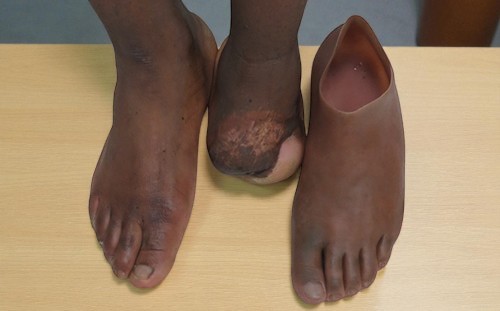
Partial Foot Prosthesis – Types, Design & Benefits A partial foot prosthesis is a custom artificial limb designed to restore mobility, balance, and comfort after a partial foot amputation. Depending on the amputation level, prosthetic options include toe fillers, transmetatarsal prosthesis, Lisfranc prosthesis, Chopart prosthesis, Syme prosthesis, and ankle disarticulation prosthesis. Made with advanced materials like silicone, carbon fiber, EVA, and pelite, these prostheses provide stability, natural gait, and patient comfort. Each partial foot prosthesis is tailored with a custom socket, foot component, and suspension system to ensure proper fit, shock absorption, and energy return. With the guidance of a certified prosthetist, patients receive personalized solutions that support walking, standing, and daily activities. Regular rehabilitation and follow-up care ensure long-term comfort, durability, and functionality.

68179d65be22ee500d53ff54 Card 2

product image
Orthosis
INR 8500

68179d65be22ee500d53ff54 Card 2

product image
Orthosis

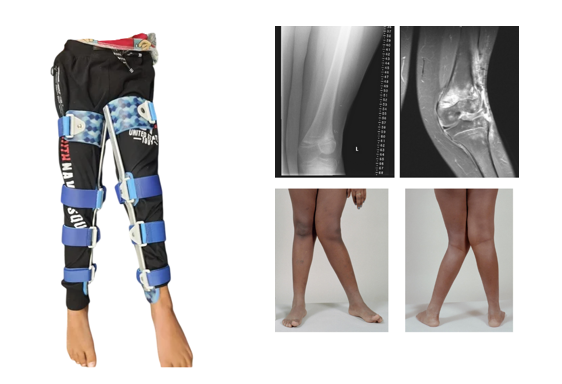
Genu varum (bowlegs) and genu valgum (knock-knees) are common knee deformities in children that often resolve naturally as they grow. Genu Varum (Bowlegs): In this condition, the knees are apart while the feet and ankles are together, creating an outward curve. It’s typical in infants and toddlers (1-3 years old) and usually improves by age 3 or 4. If severe or persistent, orthotics or braces may be used to support proper alignment and guide bone growth. Genu Valgum (Knock-Knees): Here, the knees touch but the feet are apart. It is common in children aged 3-5 and typically corrects itself over time. If it persists, orthotics or braces may be used to improve alignment. Orthotics and Braces: Orthotics are shoe inserts that correct foot misalignment, potentially improving knee positioning. Braces or splints may be used in severe cases to guide proper bone growth. Braces: In more severe cases of genu varum or genu valgum, braces or splints might be used to help guide the bones to grow in the correct position. These devices are typically used when there's a concern about the condition not self-correcting over time. Braces may be worn during activities to promote proper alignment during movement.